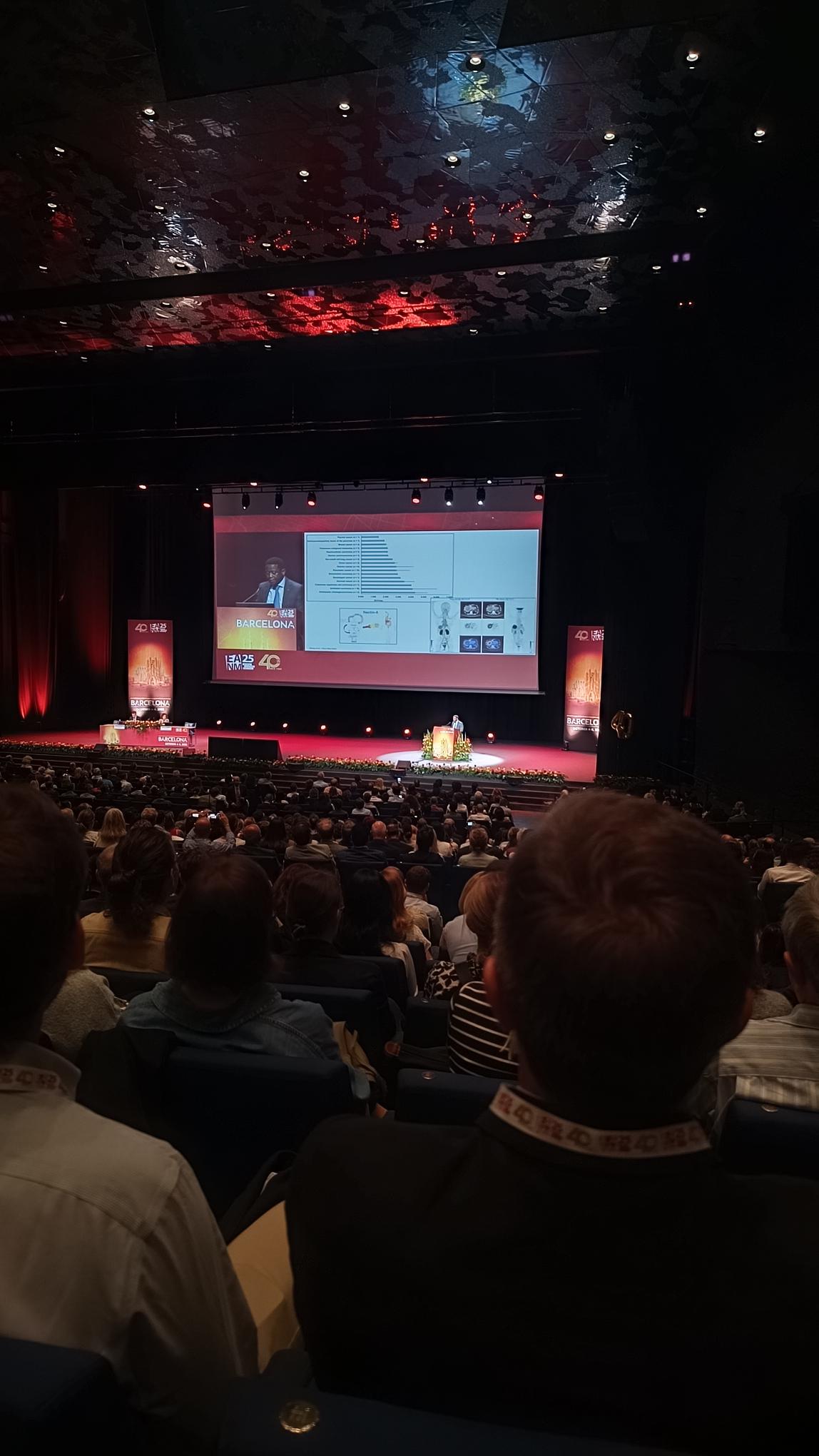
The EANM 2025 congress in Barcelona (Spain) confirmed that nuclear medicine is moving from rapid expansion into a phase of consolidation, shaped by theranostics, isotope availability, and translation into routine clinical use. With nearly 10,000 participants from more than 70 countries, the congress offered a clear view of both mature and emerging priorities relevant also to IFIGENEIA.
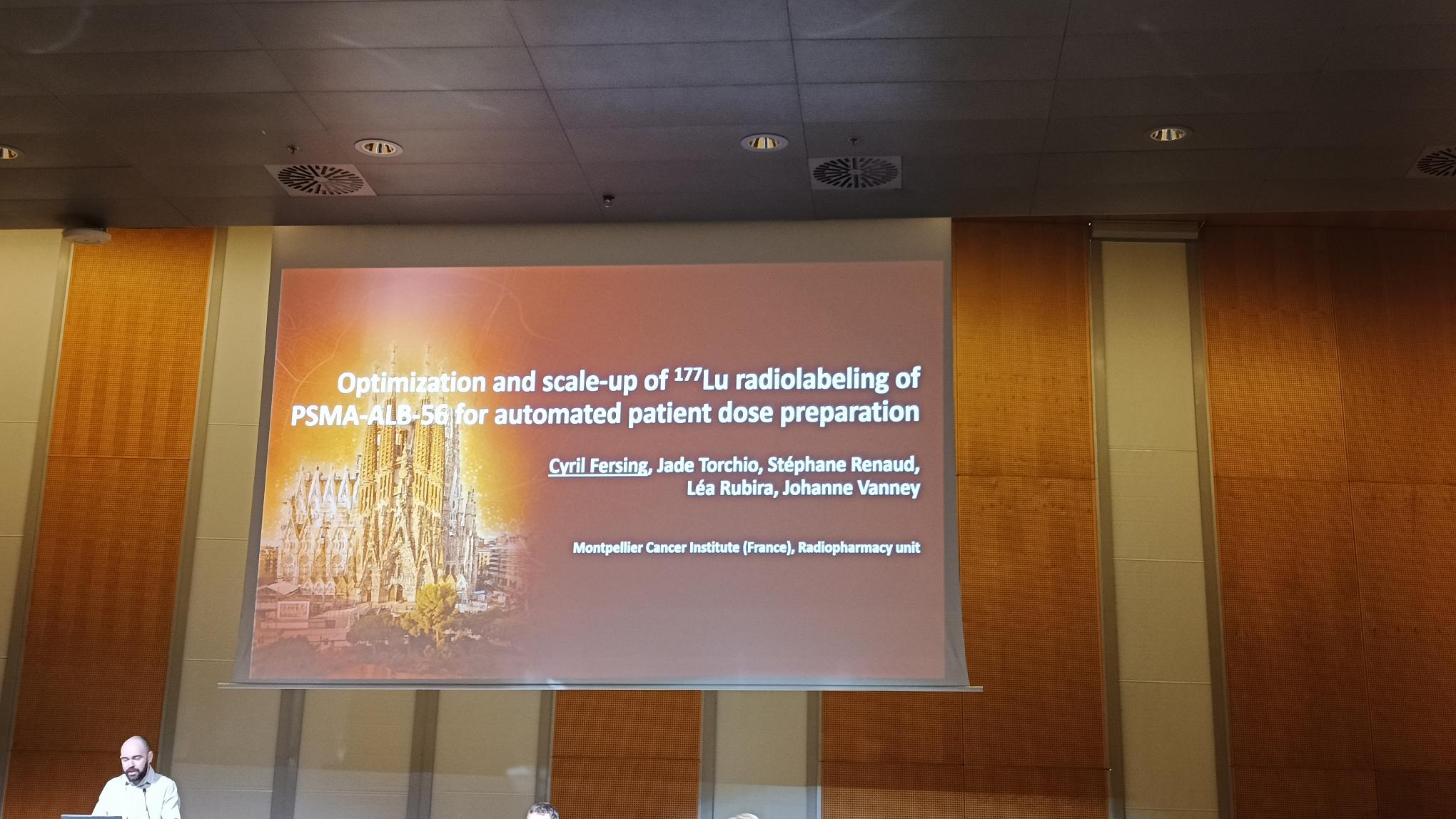
Lutetium-177 (177Lu) clearly remains the dominant therapeutic radionuclide. Clinical and industrial sessions reinforced its central role in prostate cancer and neuroendocrine tumours, alongside continued optimisation of non-carrier-added production, radionuclidic purity, and logistics. For IFIGENEIA, this validates 177Lu as a primary near-term target for LINAC-based production with direct clinical relevance.
Alpha emitters, particularly actinium-225 (²²⁵Ac), remained highly visible across both preclinical and early clinical sessions. The field is clearly moving beyond proof of concept, with expanding first-in-human studies and small clinical cohorts demonstrating impressive antitumor efficacy in selected indications. At the same time, discussions at EANM 2025 were notably more realistic, highlighting that limited availability, complex radiochemistry, demanding radioprotection requirements, high costs, and the absence of robust industrial-scale supply chains continue to constrain broad clinical translation of ²²⁵Ac. Within this context, an electron linear accelerator–based production of ²²⁵Ac was presented, demonstrating the feasibility of producing clinically relevant quantities with high radiochemical purity and radiolabeling performance comparable to conventional generator-derived material, positioning LINAC as a promising and scalable alternative technology for the production of medical radionuclides.
A strong research signal emerged around terbium isotopes (149Tb, 152Tb, 155Tb, 161Tb). Their unique theranostic properties attracted significant academic interest, positioning terbium as a medium-term opportunity aligned with European research infrastructures and innovation-driven funding schemes.
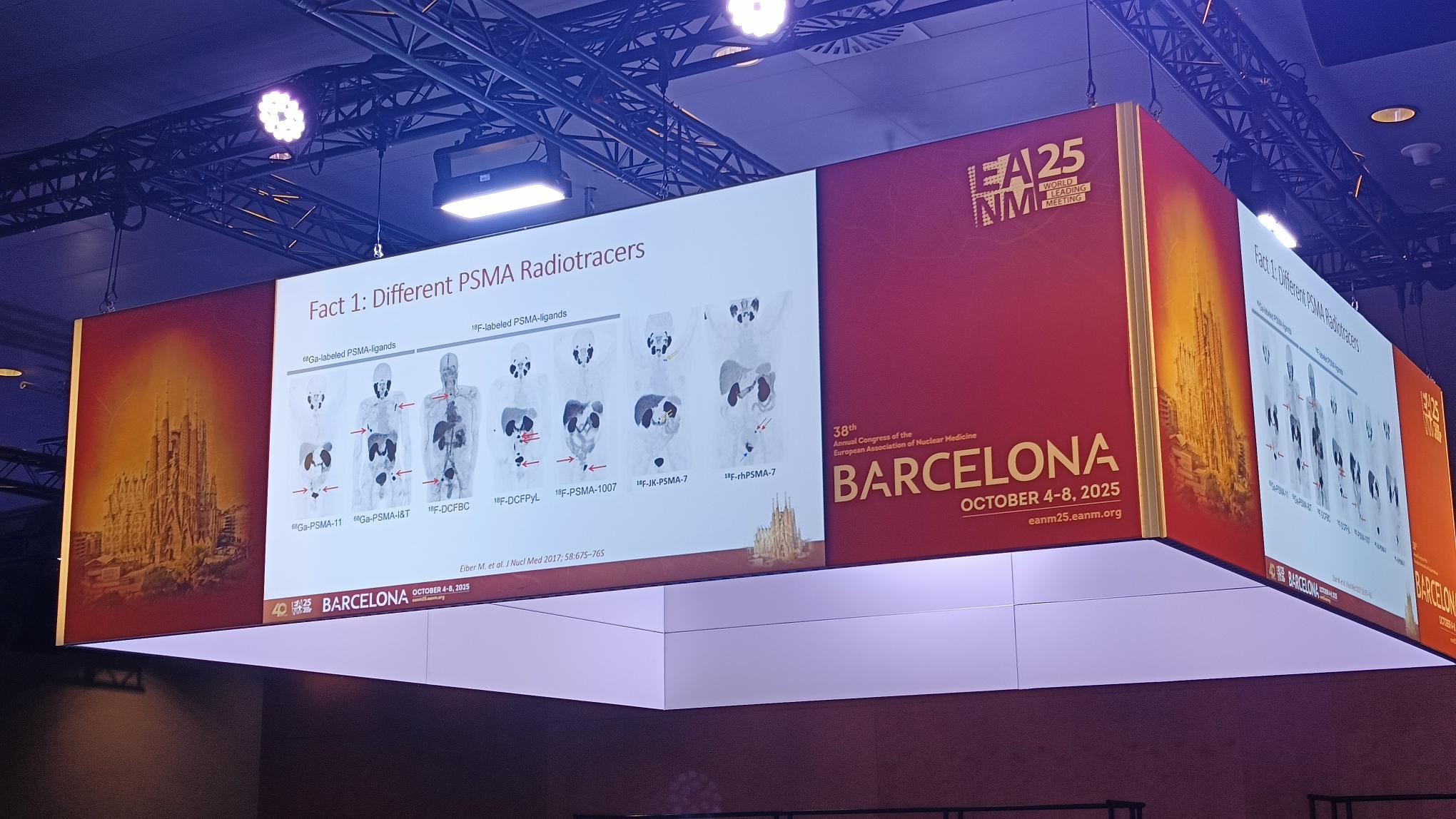
Importantly, EANM 2025 highlighted a broad expansion of novel molecular targets. Beyond PSMA and somatostatin receptors, strong translational momentum was observed for FAP, CXCR4, PD-L1, mesothelin, nectin-4, B7-H3, and other emerging targets. These developments indicate that future isotope demand will be driven not only by radionuclide availability but also by target diversity and pairing flexibility.
Overall, the EANM congress remains the largest and most important annual meeting for the global nuclear medicine community. It sets the scientific, clinical, and industrial agenda of the field and provides an early view of trends that will shape routine practice and isotope demand in the coming years. Members of the IFIGENEIA consortium participated in EANM 2025, including representatives from the University of Ljubljana Faculty of Medicine (Slovenia), Biokosmos (Greece), and NCSR Demokritos (Athens, Greece), ensuring direct engagement with the latest scientific, clinical, and industrial developments relevant to the project.