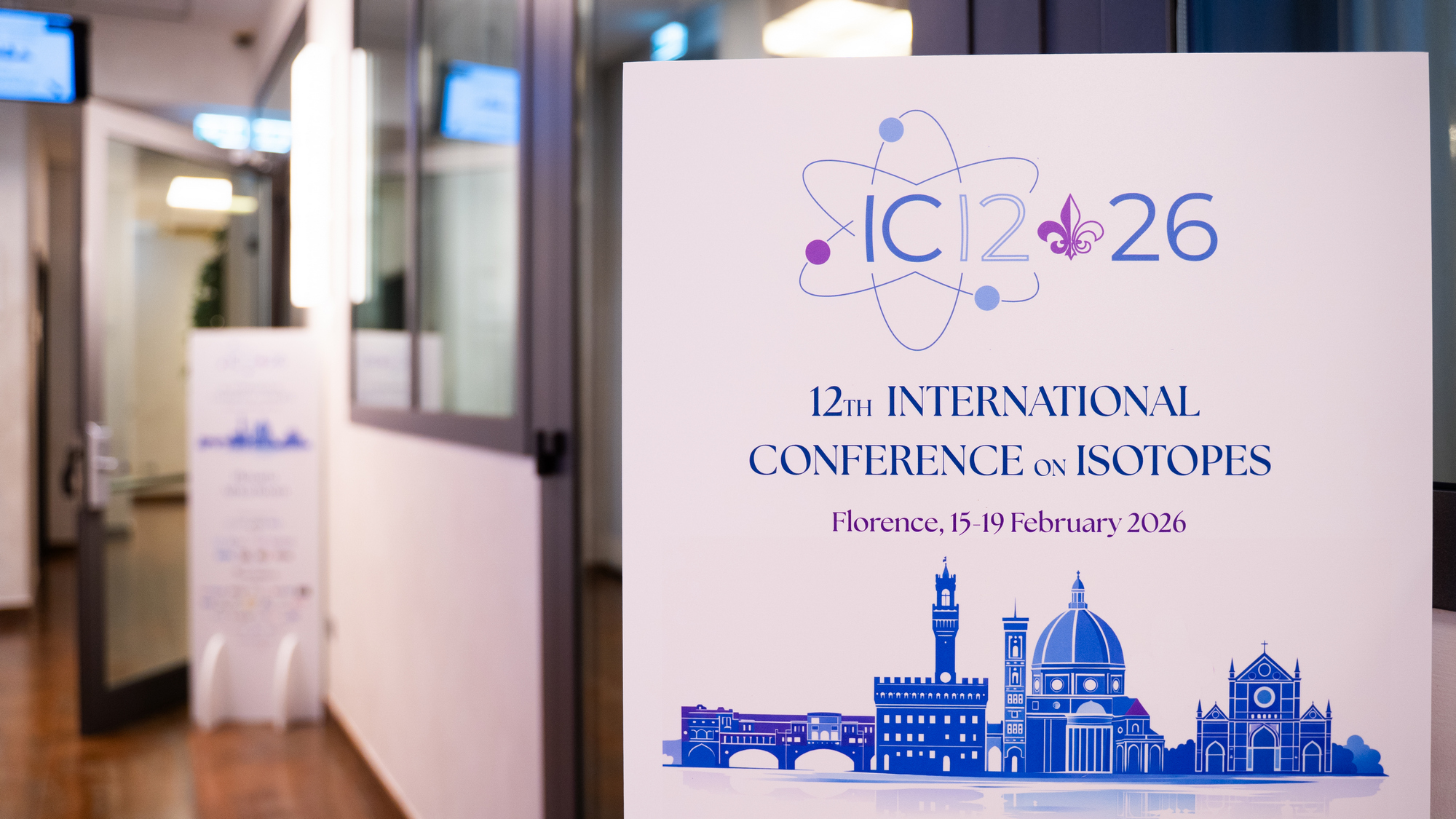
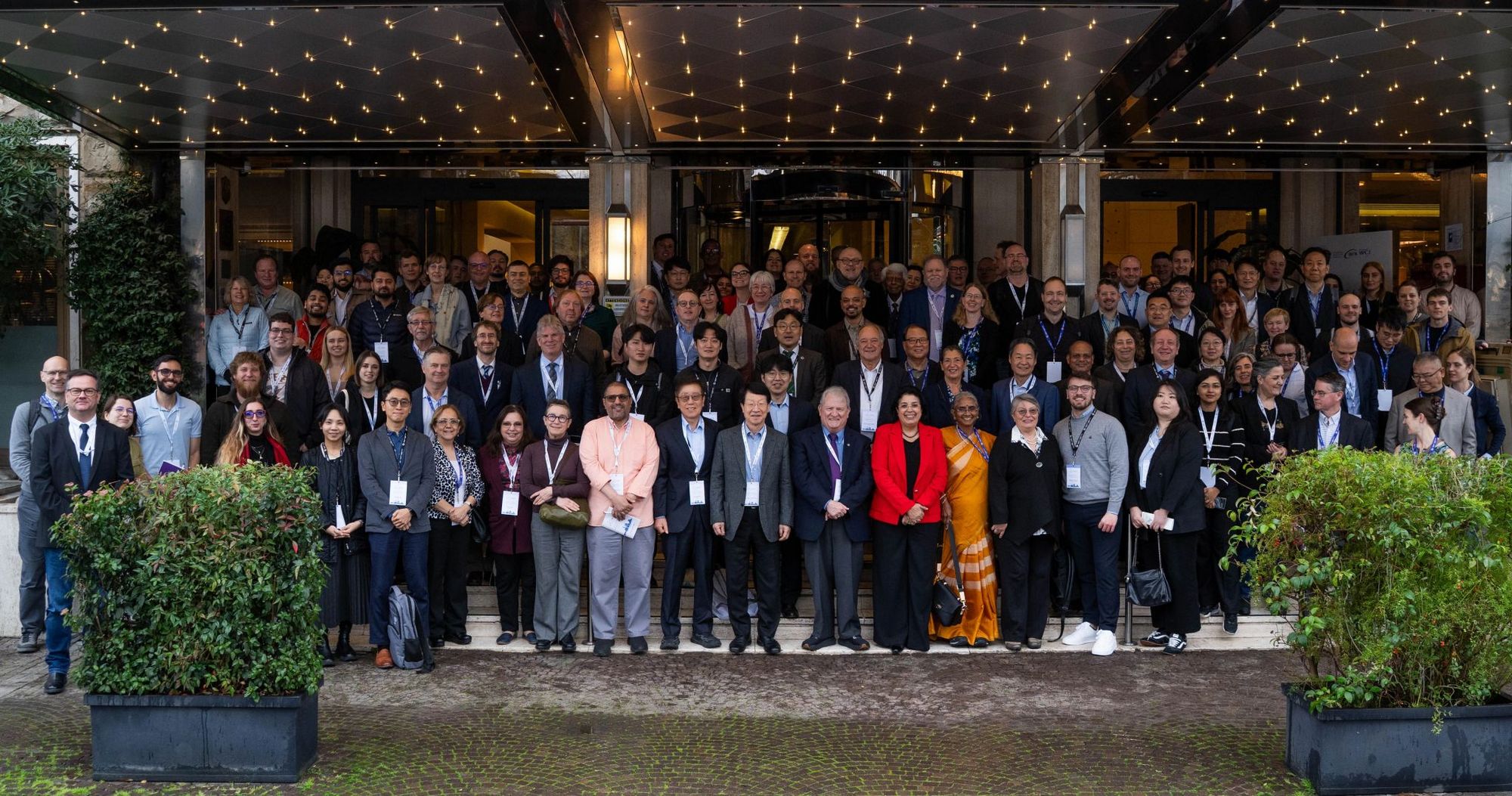
The 12th International Conference on Isotopes (ICI), held in Florence, continues a long-standing series of meetings bringing together scientists across disciplines where isotopes and nuclear radiation play a key role in technological and societal progress. Organised under the framework of the World Council on Isotopes (WCI), the conference serves as a platform for exchange between communities working on isotope production, applications, and measurement techniques, bringing together a broad international community of experts and offering a comprehensive overview of current developments in the field.
Within this context, the IFIGENEIA Project contributed to the conference with two presentations addressing both its linear accelerator-based approach and its broader capacity-building activities. The first presentation, “Advancing theranostic radioisotope production through ion linear accelerator-based technologies”, introduced the project’s scope and its accelerator-based approach to medical isotope production. This contribution followed and complemented a CERN presentation on “Compact Linear Accelerators for Radioisotope Production”, reinforcing the growing role of accelerator-driven solutions in the isotope production landscape.
A central element of this contribution was to show how IFIGENEIA aims to use LINAC technologies as a flexible solution for producing a wide range of medical radioisotopes. The adaptability of LINACs in terms of beam energy, intensity, and particle species makes them a scalable approach, capable of delivering a broad portfolio of radioisotopes for medical applications. In this context, IFIGENEIA aims to define a design suited to these diverse production needs. Lutetium-177 (¹⁷⁷Lu) was used as a case study, as it supports capacity building across the full production chain. The results presented demonstrated that LINAC-based approaches can achieve ¹⁷⁷Lu yields compatible with regional demand, in particular for the Balkan region.
A second presentation, “Particle therapy masterclass as a means of capacity building”, focused on the project’s mentoring activities and capacity-building programme. It emphasised the importance of developing expertise, fostering interdisciplinary collaboration, and supporting the next generation of scientists in the fields of nuclear medicine and accelerator technologies. These efforts are an integral component of the project, ensuring that technological innovation is accompanied by sustainable knowledge transfer and community development.
More broadly, participation in the conference provided valuable insight into the evolving landscape of medical radionuclides. Discussions confirmed the continued importance of well-established isotopes such as ¹⁷⁷Lu, while also pointing to increasing diversification in both production approaches and clinical applications.
Overall, the Florence conference reinforced the relevance of the IFIGENEIA approach, particularly in positioning accelerator technologies as extendable complementary methods for securing the future supply of medical isotopes. The interactions with the international community contributed to refining the project’s perspective and will inform its next stages of development.