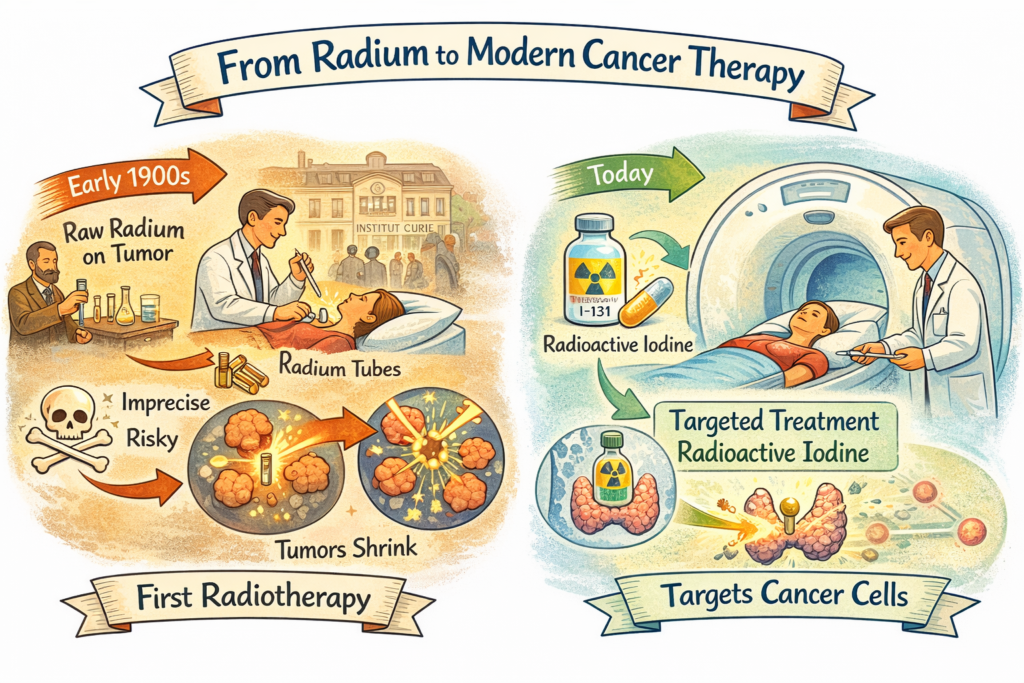
In the early 1900s, a cancer diagnosis often meant there was little hope. Surgery was risky, and many tumours could not be removed. Around this time, scientists like Marie Curie had discovered radium – a substance that emitted powerful, invisible radiation.
Doctors began experimenting. In hospitals such as the Institut Curie, they placed small radium tubes directly into tumours, especially in patients with cervical cancer. This was one of the first forms of radiotherapy.
For the first time, something extraordinary happened – tumours started to shrink. Radiation, once seen only as dangerous, became a tool to destroy cancer cells from within.
However, these early treatments were imprecise and risky. Both patients and doctors were exposed to radiation, often without fully understanding its dangers.
Today, instead of placing raw radium into tumours, doctors use targeted treatments that exploit the body’s own biology – and one of the most important milestones in that journey was the discovery of radioactive iodine, iodine-131.
Authors: Marko Krošelj, Martina Perše
Pictures: AI created