
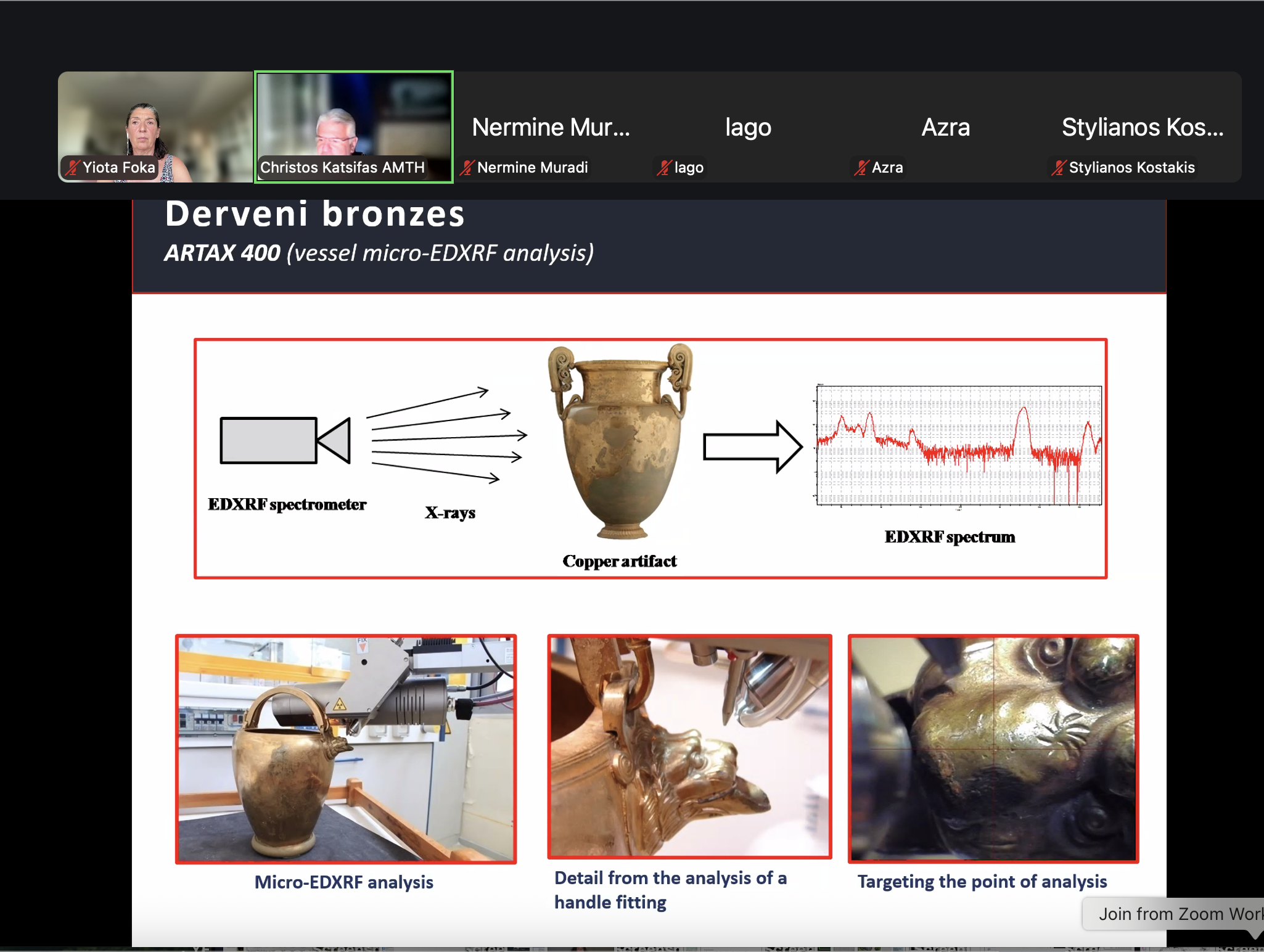
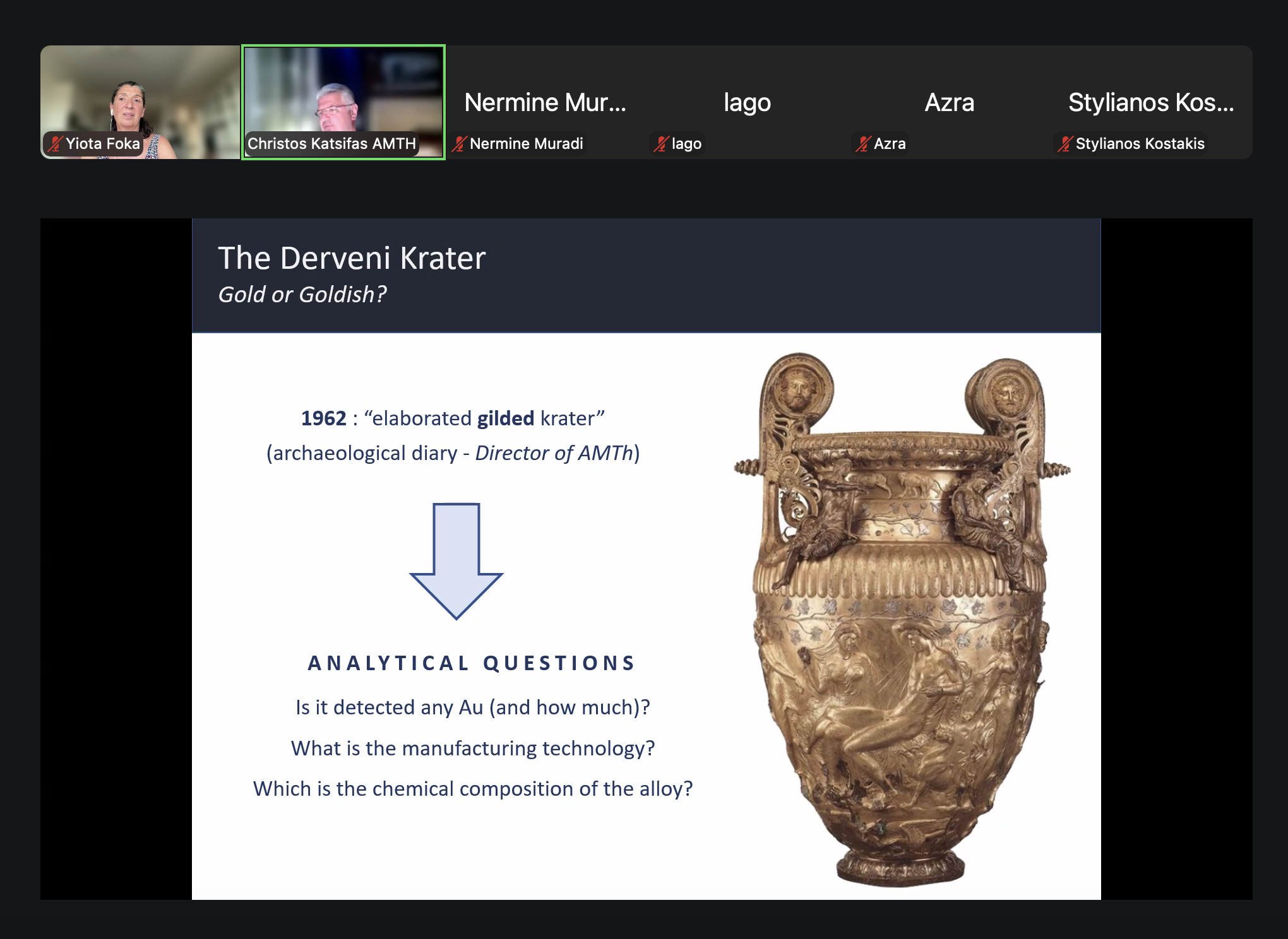
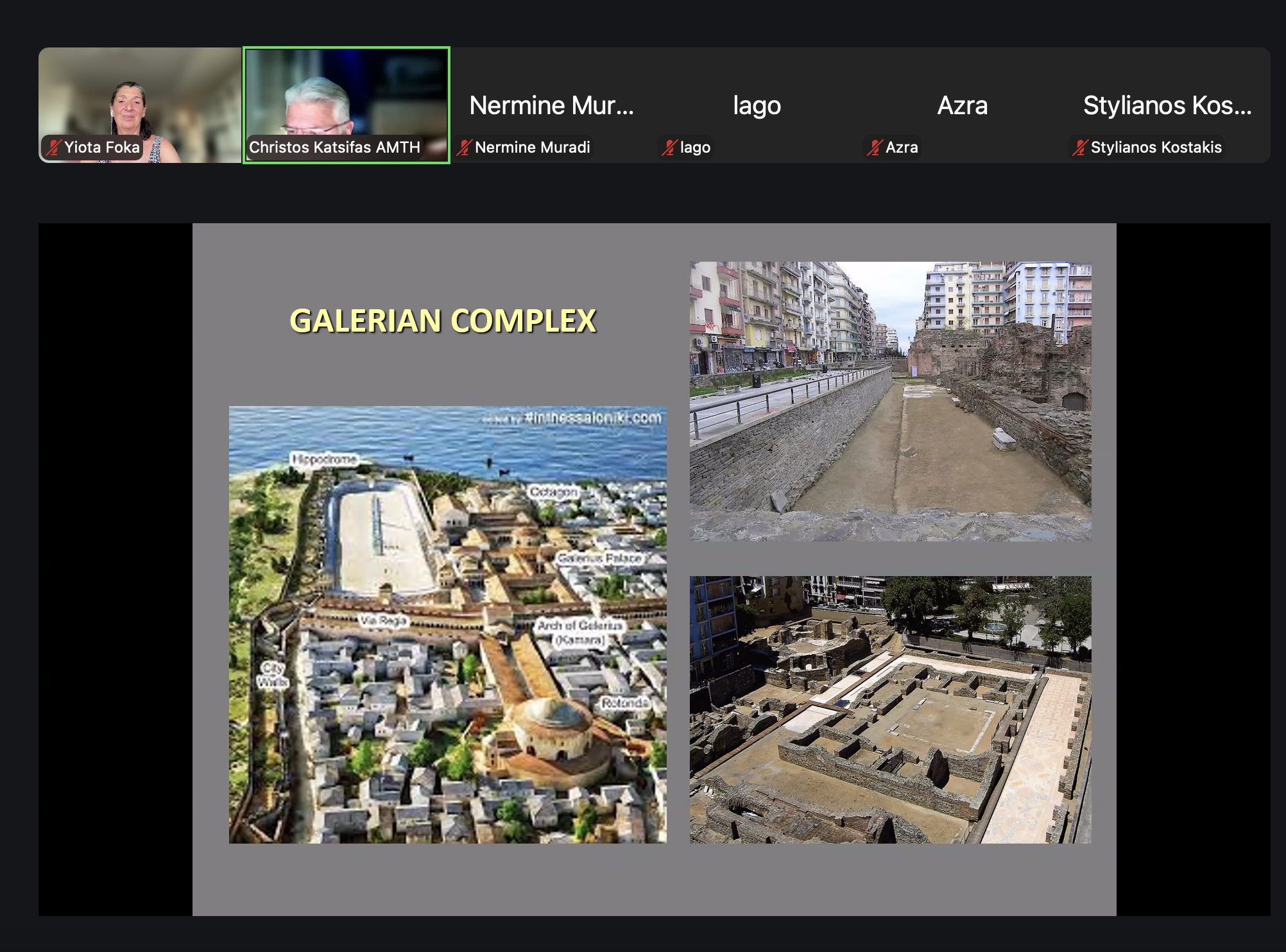
On 17 September 2026, the online lecture series of the Challenge Based Innovation CBI2026 special edition, focusing on Particle Accelerators’ Applications for Society (https://indico.cern.ch/event/1661135/page/42417-challenge-based-innovation), concluded with a seminar by Christos Katsifas, Conservator of Antiquities & Works of Art, Archaeological Museum of Thessaloniki. The seminar, entitled “Measuring the Past: non-invasive analysis &complementary analytical techniques on ancient artefacts”, marked the final session in a series of expert lectures.
One of the selected students who will participate in the in-person sessions starting on 22 September, hosted by UNSA in Sarajevo, shared her views and motivations. Her reflections capture the essence of CBI and its alignment with the aims of the IFIGENEIA project:
“What immediately caught my attention was that this is not simply another scientific workshop. Low-energy particle accelerators provide the technological starting point, but the real question is much broader: how can we use advanced scientific technology to address contemporary challenges and develop applications with meaningful societal impact?”
Below, Eirini Xanthopoulou shares her full reflection on the journey that led her to CBI2026, her motivations for participating and her perspective on connecting science, innovation and societal needs.
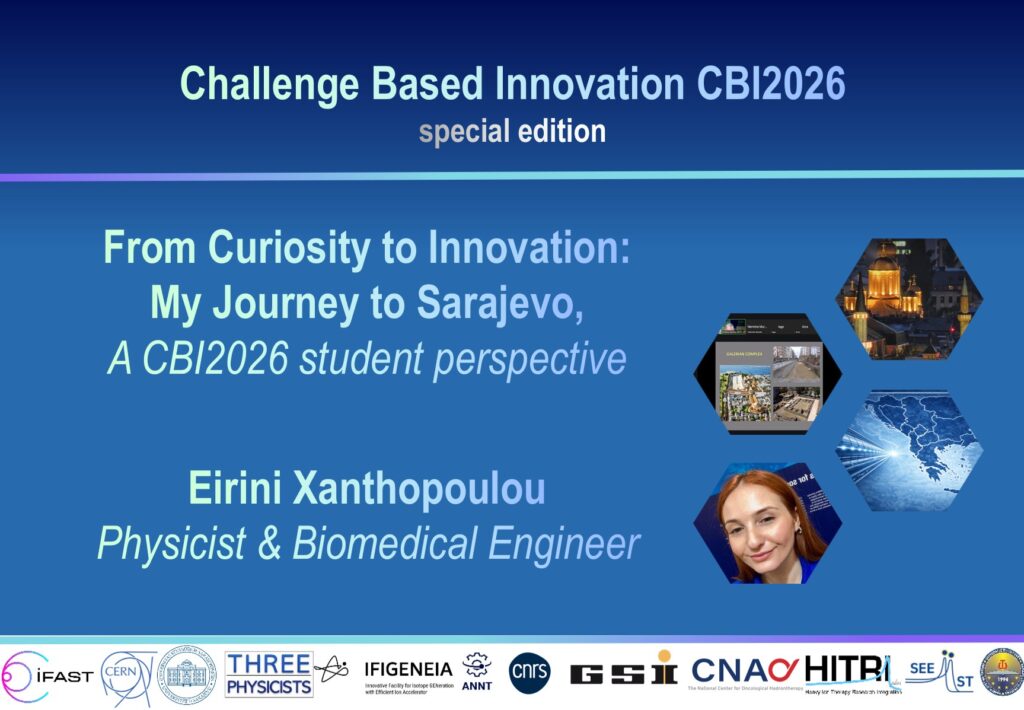
My name is Eirini Xanthopoulou, and I am a Physicist and Biomedical Engineer with a strong interest in Medical Physics, biomedical technologies, and their applications in healthcare. My academic and research journey has taken me across different but closely connected fields, from nuclear applications in medicine and medical imaging to research in Magnetic Resonance Imaging and, more recently, European research projects focusing on medical data and emerging digital technologies. What connects all these experiences for me is a genuine interest in understanding how scientific knowledge can move beyond the laboratory and be transformed into technologies that create meaningful value for people.
If I had to choose one word to describe what has led me from Physics to Biomedical Engineering and now to the Challenge Based Innovation (CBI) programme in Sarajevo, it would probably be curiosity: the need to understand how things work, to explore what lies just beyond the boundaries of my own scientific field, and, most importantly, to ask what we can actually do with the knowledge we acquire.
My academic journey began at the Department of Physics at Aristotle University of Thessaloniki, where my interests gradually shifted towards Medical Physics and nuclear applications in medicine. This was where I started seeing Physics not only as a way of understanding the world around us, but also as a powerful tool with very direct applications in our everyday lives. This perspective eventually led me to Biomedical Engineering, specialising in Medical Physics and Imaging, and to research in biomedical imaging and Magnetic Resonance Imaging.
At the same time, through my participation in scientific and educational activities related to CERN, particle therapy, and applications of Physics in medicine, I had the opportunity to see first-hand the journey of a scientific idea, from fundamental research to an application capable of providing tangible benefits to society. These experiences strengthened my interest in bringing different scientific disciplines together and, particularly, in that exciting point where research meets innovation.
It was within this context that the opportunity to participate in the Challenge Based Innovation programme in Sarajevo emerged. What immediately caught my attention was that this is not simply another scientific workshop. Low-energy particle accelerators provide the technological starting point, but the real question is much broader: how can we use advanced scientific technology to address contemporary challenges and develop applications with meaningful societal impact?
Particle accelerators are often associated with large research facilities and fundamental science. Their potential, however, extends far beyond that, from medicine and materials science to environmental applications and industry. For me, this transition from asking “What can this technology do?” to “What real-world problem can we solve with it?” is one of the most fascinating aspects of CBI.
And, in a way, curiosity becomes my ticket to Sarajevo. I am particularly excited about being in an environment where people from different scientific and professional backgrounds will come together and look at the same technology from completely different perspectives. A physicist, an engineer, a healthcare researcher, or someone approaching the challenge from an entrepreneurial perspective may see entirely different possibilities within the same problem. Very often, innovation begins precisely there, not necessarily when we discover something completely new, but when we learn to look at what we already know in a different way.
Through my participation in CBI, I naturally hope to expand my knowledge of low-energy accelerators and their applications. More importantly, however, I look forward to meeting new people, exchanging ideas, listening to different perspectives, and exploring a different approach to scientific innovation, one that begins not only with the technology available to us, but with the problem we want to solve and the people who could ultimately benefit from the solution.
Perhaps, then, my goal when returning from Sarajevo is not simply to come back with more knowledge, or even with a ready-made answer to a particular problem. I would like to return with better questions, new ideas, and new people with whom those ideas are worth exploring. Because, ultimately, that is what I find most exciting about science: every answer has the potential to become the starting point for the next question.