From 22 September to 1 October 2026, Sarajevo hosted the 2026 edition of the Challenge Based Innovation (CBI) programme, a ten-day challenge in which multidisciplinary teams of students developed new ideas for putting particle accelerators to work for society. This year’s case study was the Balkans.
Accelerators such as the Large Hadron Collider at CERN are among the largest scientific instruments ever built, but most of the world’s accelerators are small machines doing everyday work: detecting and cleaning up pollution, modifying materials, imaging patients and treating tumours.
This year’s CBI event presented the participants with a regional challenge: how can particle accelerators be used to address societal issues, with the Balkans as the case study for implementation?
The participants were senior bachelor’s and master’s students from European universities, coming from physics, medicine, engineering, materials science, environmental and life sciences, and applied mathematics. Experience with accelerators was an advantage in the application, but not a requirement.
According to the Faculty of Science and Mathematics of the University of Sarajevo, which hosted the programme, the participants worked in four international teams of six, with all of their costs covered by the programme.
The selected applicants had already met online on 1 September 2026 and had participated in a series of online seminars between 3 and 17 September that introduced particle accelerators and their applications, as well as innovation methods and scientific communication.
The ten days in Sarajevo brought the teams together in person, supported by mentors and seminars from accelerator specialists, including Maurizio Vretenar and Fanouria Antoniou (CERN), Nicolas Delerue (CNRS), and Sandro Rossi (CNAO), several of whom were present in Sarajevo throughout the programme.
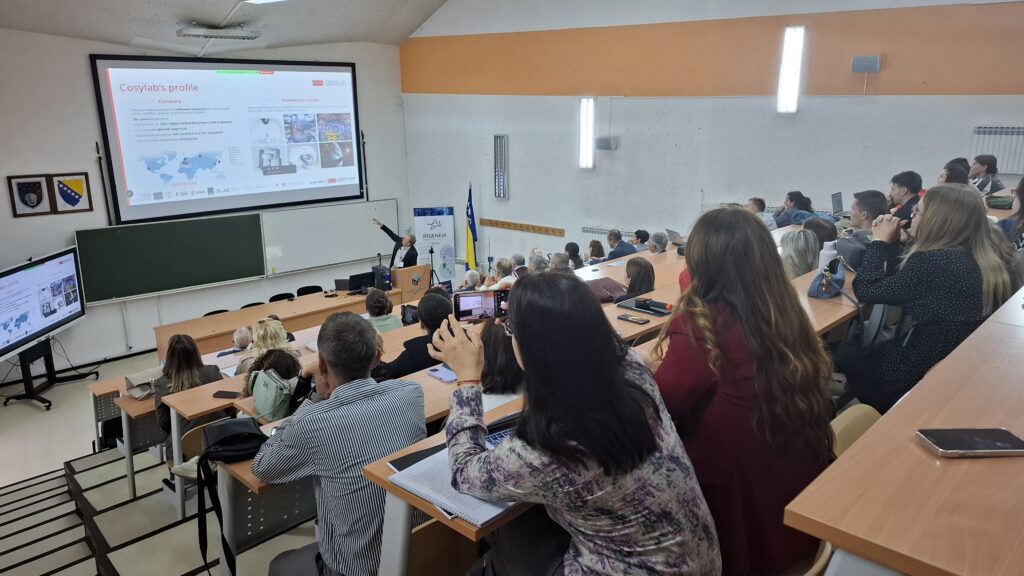
On 1 October 2026, the teams presented their work to an international jury at the University of Sarajevo, followed by an award ceremony. The winning team will travel to CERN for a hands-on experience with the ELISA accelerator on display at the CERN Science Gateway and receive support to take their idea a step further.
The initiative was put forward by the Three Physicist Foundation, together with the IFIGENEIA project and academic partners, including CERN, CNAO, CNRS, GSI and the University of Sarajevo, and built on the CBI events organised in previous years under I.FAST.
Within IFIGENEIA, the project funded the participation of selected students from Slovenia, Greece and Cyprus, as well as accelerator experts who joined as mentors and speakers.
For IFIGENEIA, this is a direct investment in the people the project will eventually depend on. IFIGENEIA is developing the design study and the business plan to implement LINAC technology for sustainable radioisotope production in Europe and to build interconnected centres of excellence across the Balkans. Facilities of that kind are designed, built and operated by engineers and physicists who are, in many cases, still at university.
Among the IFIGENEIA partners, Cosylab d. d. from Ljubljana supported the Sarajevo edition directly. The company backed Slovenian students’ participation and provided T-shirts for the teams, and Cosylab co-founder Mark Pleško took part in person.
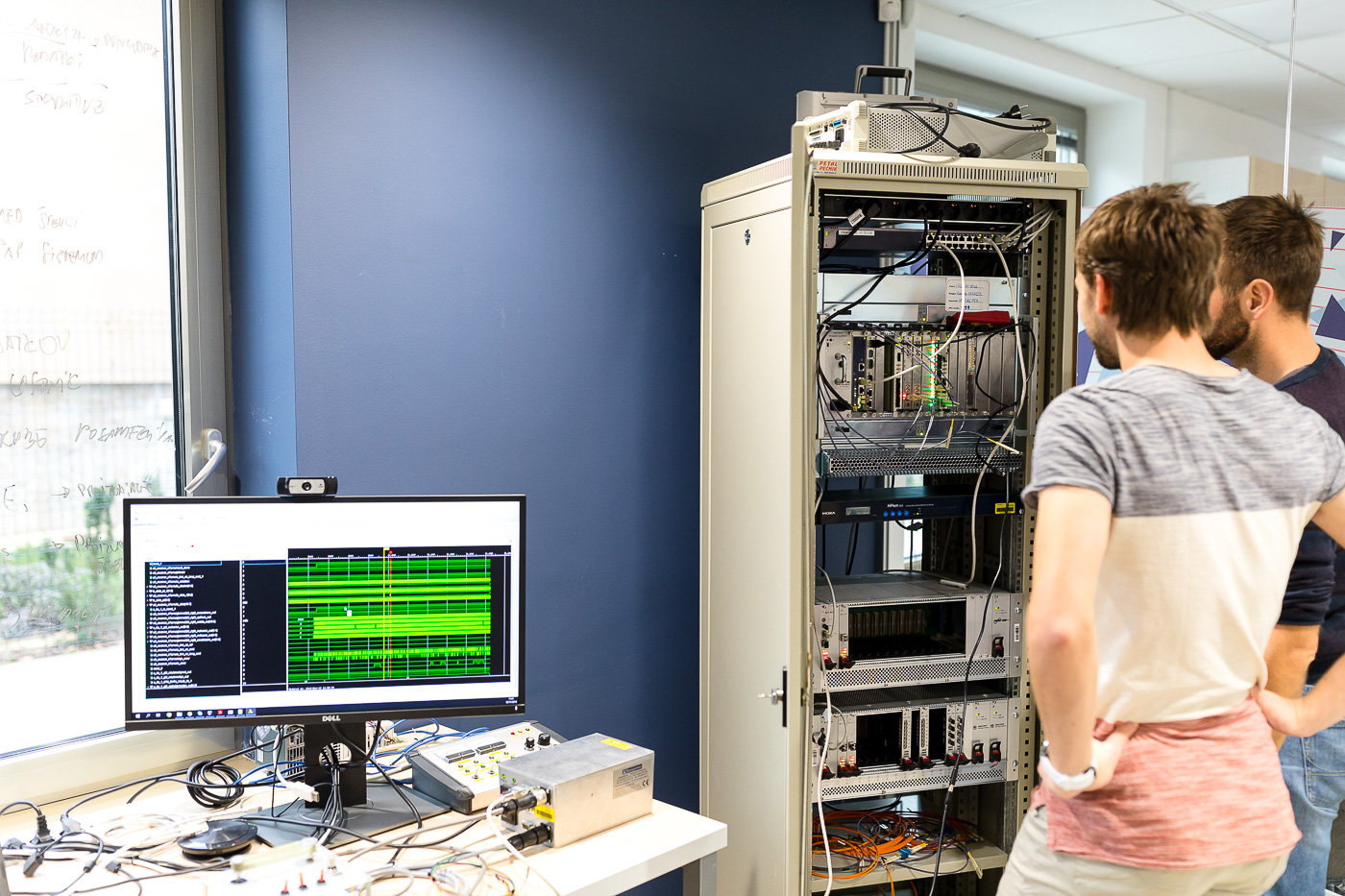
Within the project, Cosylab leads quality assurance, risk and ethics management, and is responsible for the control system development project plan in the LINAC design work package, work that draws on more than two decades of experience in developing control systems for accelerators, particle therapy centres, radioisotope production facilities, and large research facilities worldwide.
The company also contributes to the project’s education and dissemination activities and is available to the consortium as a mentor, which is what brings it to Sarajevo. Putting the region on the map of radioisotope production means having engineers there who can design and operate the machines.
The results of the 2026 challenge were presented on 1 October 2026 at the University of Sarajevo.