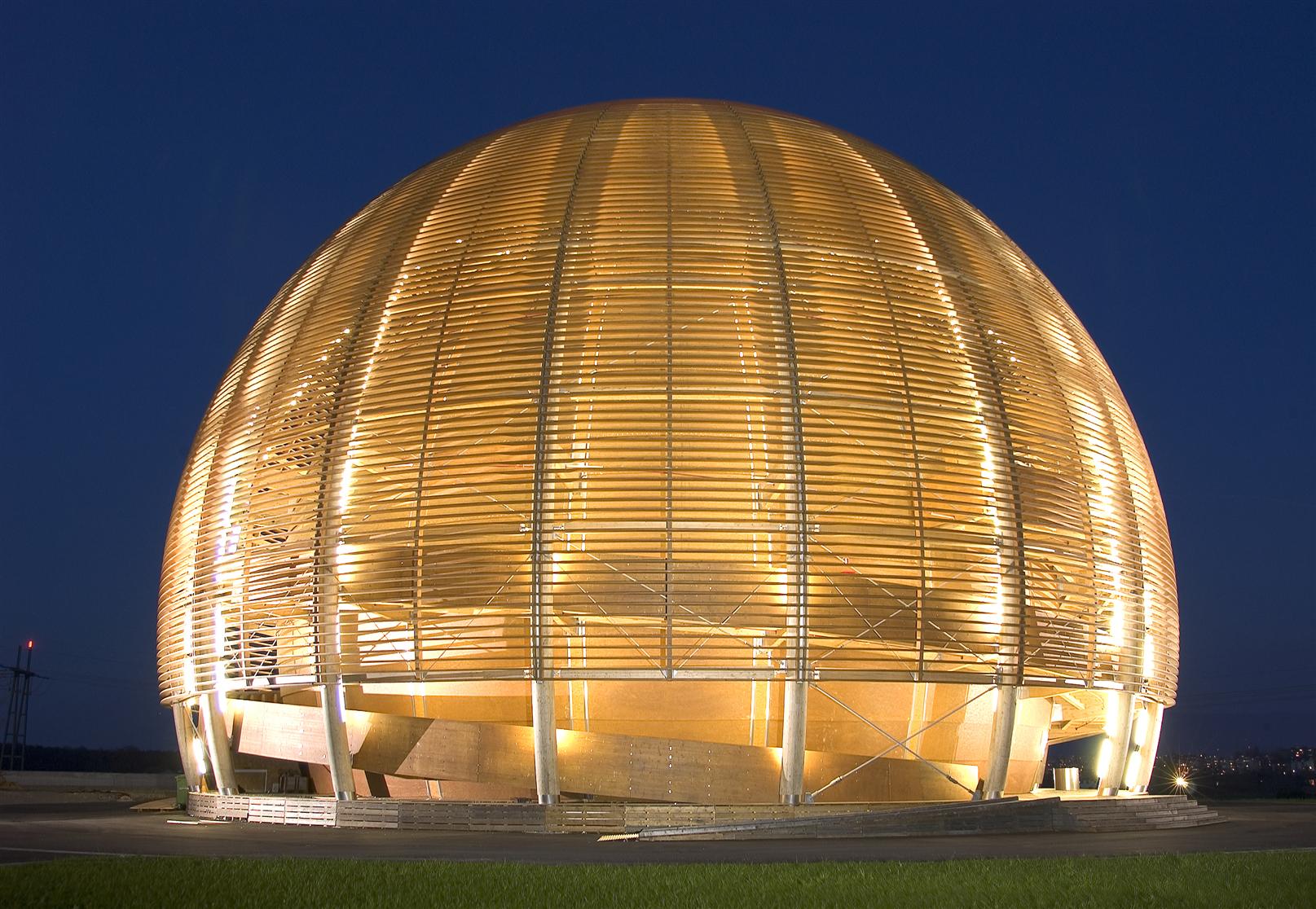
Advancing accelerator science and knowledge transfer, CERN brings its world-leading expertise in particle physics and LINAC technologies to the IFIGENEIA project. Physicists and engineers at CERN use the world’s largest and most complex scientific instruments to study the basic constituents of matter – fundamental particles. Subatomic particles are made to collide together at close to the speed of light. The process gives us clues about how the particles interact and provides insights into the fundamental laws of nature. We want to advance the boundaries of human knowledge by delving into the smallest building blocks of our universe. The instruments used at CERN are purpose-built particle accelerators and detectors. Accelerators boost beams of particles to high energies before the beams are made to collide with each other or with stationary targets. Detectors observe and record the results of these collisions. Founded in 1954, the CERN laboratory sits astride the Franco-Swiss border near Geneva. It was one of Europe’s first joint ventures and now has 24 member states. CERN, the European Organization for Nuclear Research, is the leading international organisation for particle physics research, using massive particle accelerators like the Large Hadron Collider and its detectors to study the fundamental constituents of matter and the forces that govern them. CERN also plays a significant role in technological innovation, including medical applications. Its role in IFIGENEIA is knowledge transfer and supervision of the LINAC design for radio-isotope production.