
Did you know?

Did you know?
Medicine
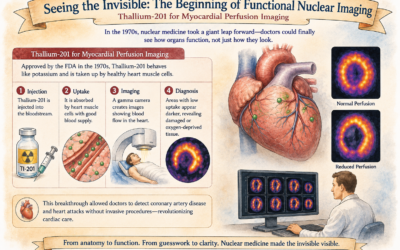
Did you know: Seeing the invisible – The beginning of functional nuclear imaging
Radioactive iodine (I-131 and I-123) had already shown what nuclear medicine could do. By following a substance naturally taken up by the thyroid, physicians could not only treat thyroid disease, but also observe the gland at work. It demonstrated the broader...
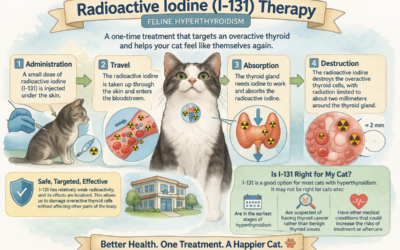
Did you know: Targeted radionuclide therapy isn’t just for humans
Did you know that targeted radionuclide therapy is used not only to treat people but also animals? When we think about radiation therapy, we usually imagine hospitals treating cancer patients. But the same science is also helping veterinarians treat diseases in pets....
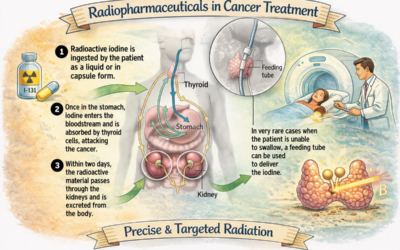
Did you know: Iodine-131: A small atom with a big history
The story of iodine-131 began in the late 1930s, when physicists at MIT - including Saul Hertz and Arthur Roberts - first proposed that radioactive iodine could be used to treat thyroid disease. Their insight was elegant: the thyroid gland naturally absorbs iodine...
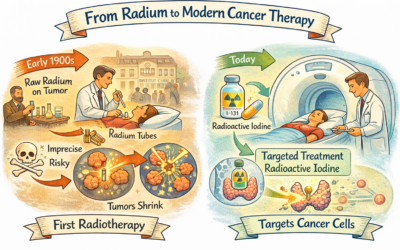
Did you know: From radium to modern cancer therapy
In the early 1900s, a cancer diagnosis often meant there was little hope. Surgery was risky, and many tumours could not be removed. Around this time, scientists like Marie Curie had discovered radium - a substance that emitted powerful, invisible radiation. Doctors...

Did you know: Radiofarmaceuticals and the story behind them
Radiofarmaceuticals are a special type of medicine that use radioactive substances to diagnose or treat diseases, especially cancer. But their story begins more than 100 years ago - with a surprising discovery. In 1896, the French scientist Henri Becquerel...
Physics
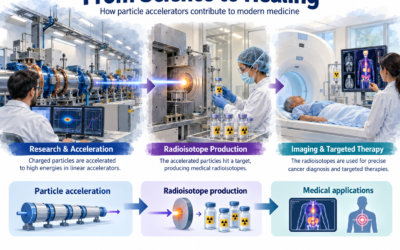
Did you know: Particle accelerators can also help save lives!
Particle accelerators are often associated with scientific discoveries and large research laboratories. But did you know that they also play an important role in modern medicine? The story began more than 100 years ago. In 1895, the German physicist Wilhelm Röntgen...