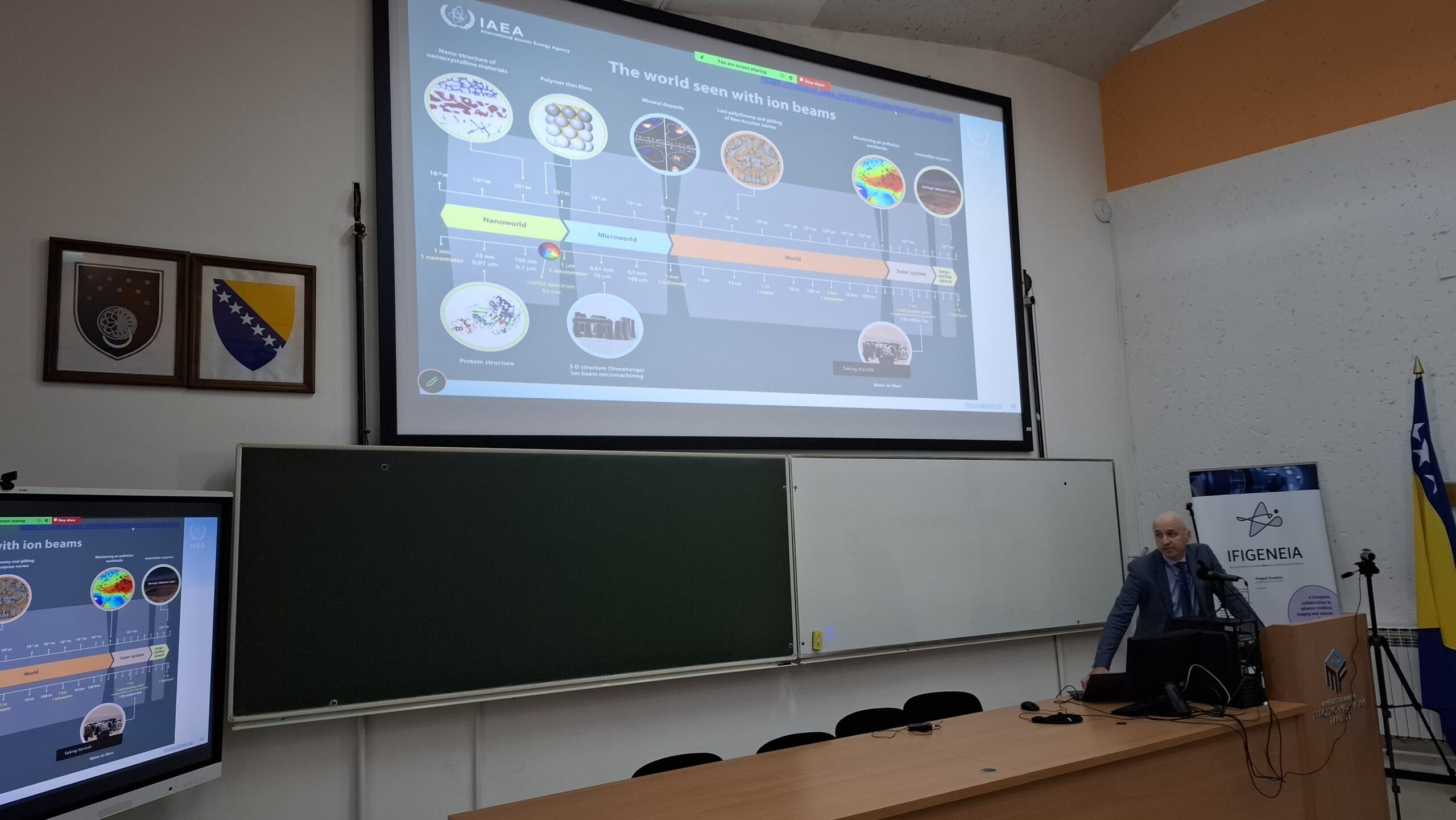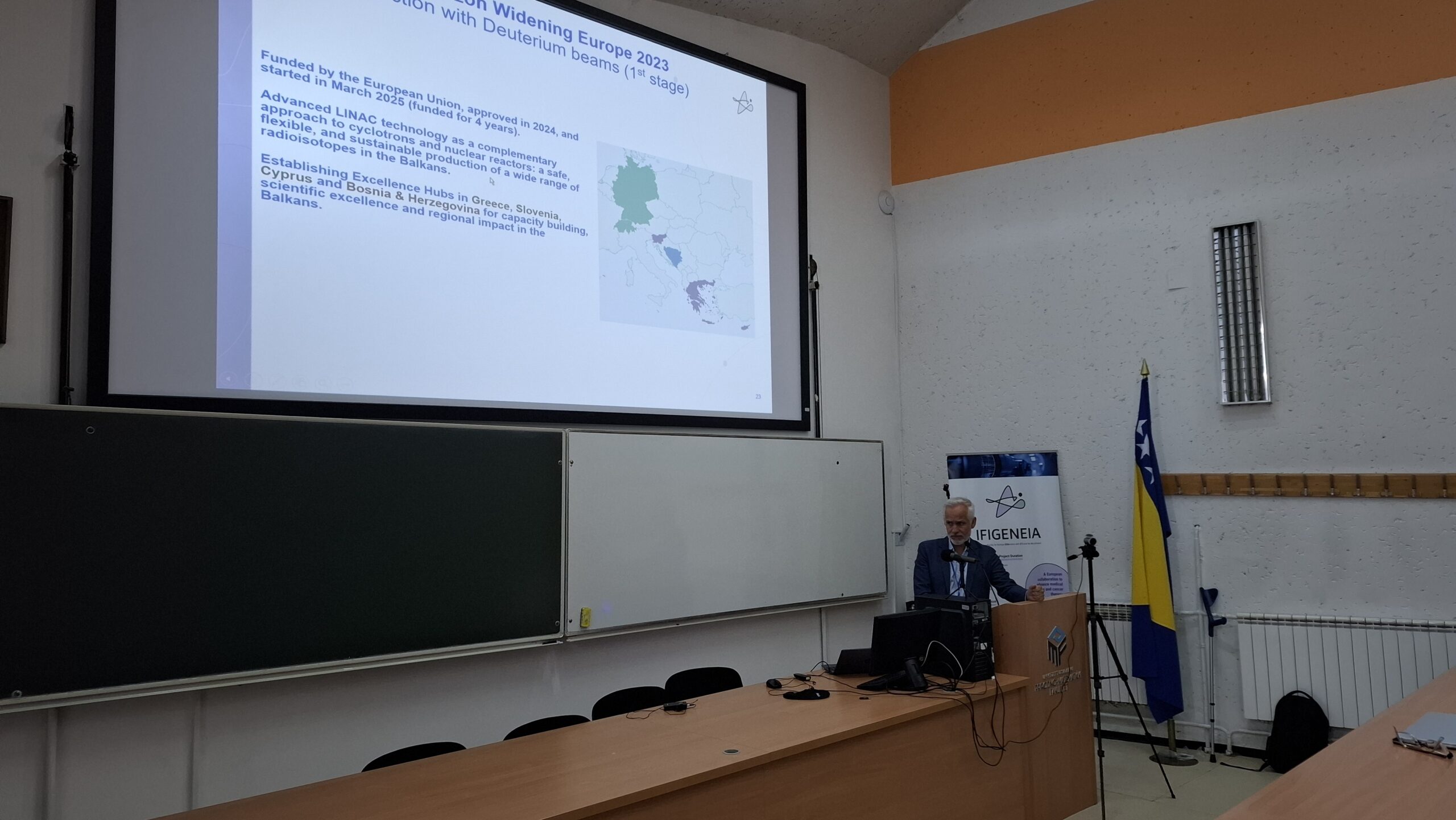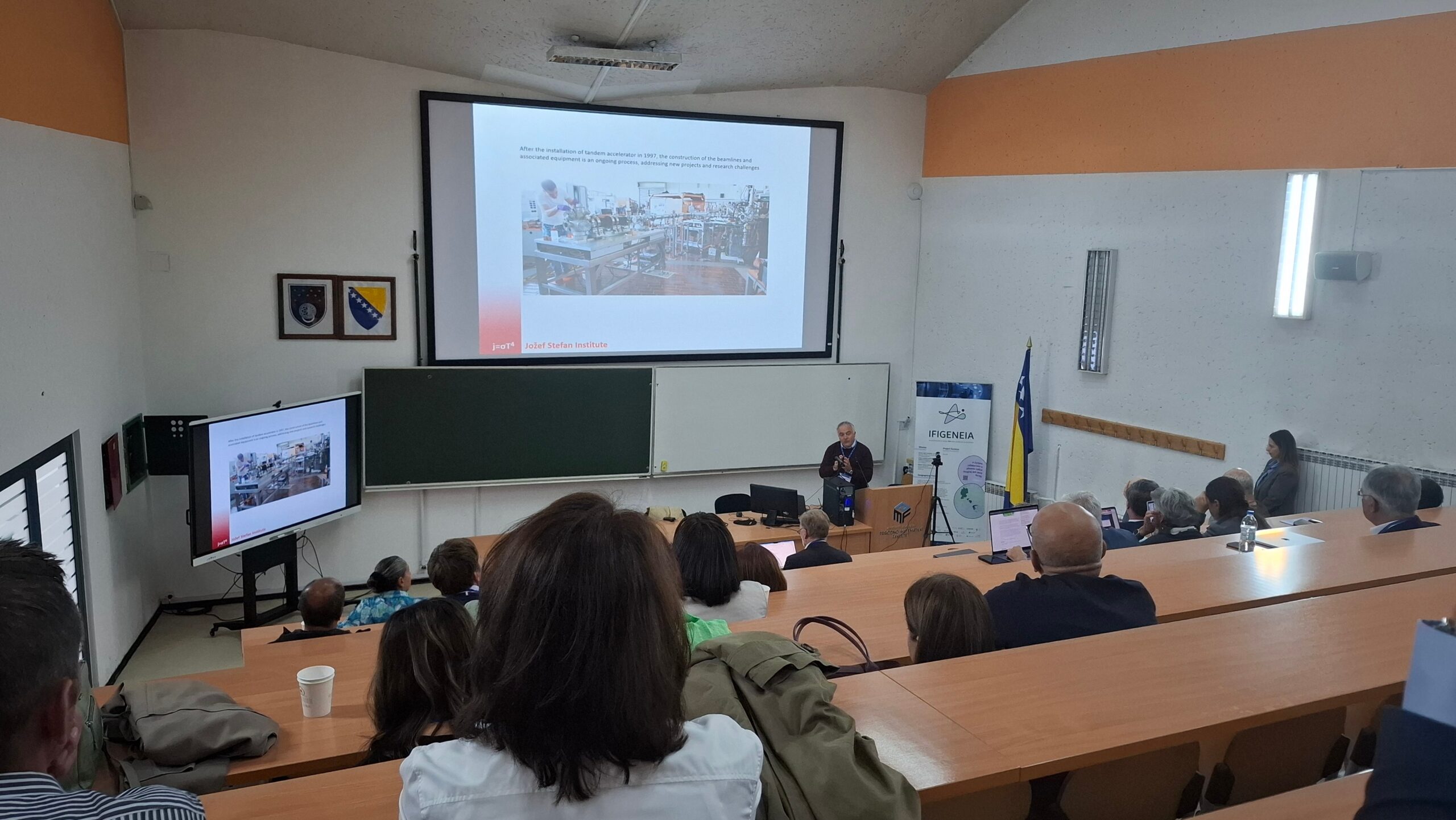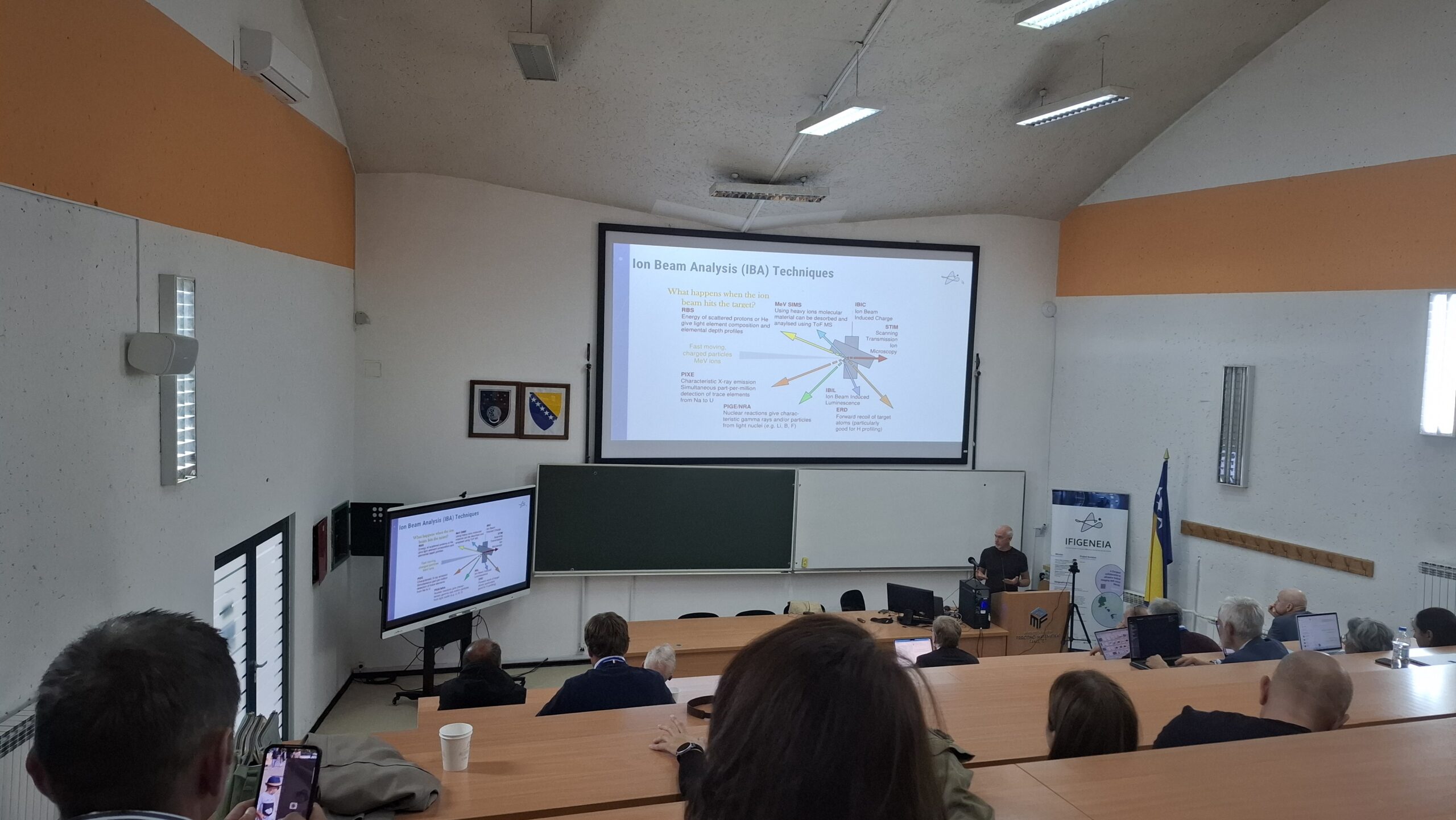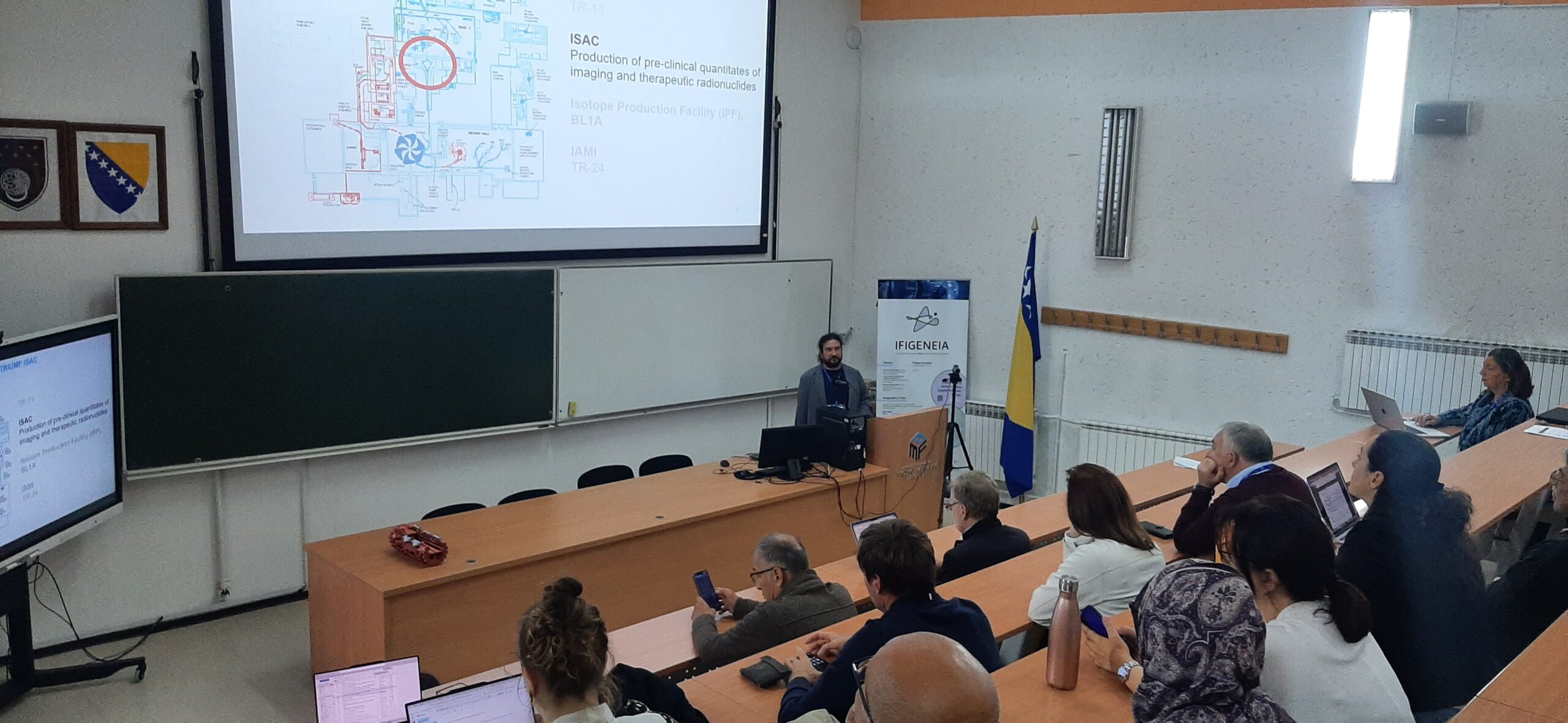
We were especially honored to open the workshop with an outstanding line-up of speakers. Danas Ridikas, Head of the IAEA’s Physics Section, spoke about the benefits of accelerator science for society, and Yannis Papaphilippou, CERN’s Accelerator and Beam Physics Group Leader, presented CERN’s scientific mission and its societal applications. Sandro Rossi, Director General of CNAO, outlined the center’s work and future plans in hadron therapy. Fenella France of the US Library of Congress spoke about cultural heritage preservation, and Mark Pleško shared how Cosylab grew from a scientific idea into a company. Dimos Sampsonidis, IFIGENEIA project coordinator at Aristotle University of Thessaloniki, presented the project’s scope and current status.
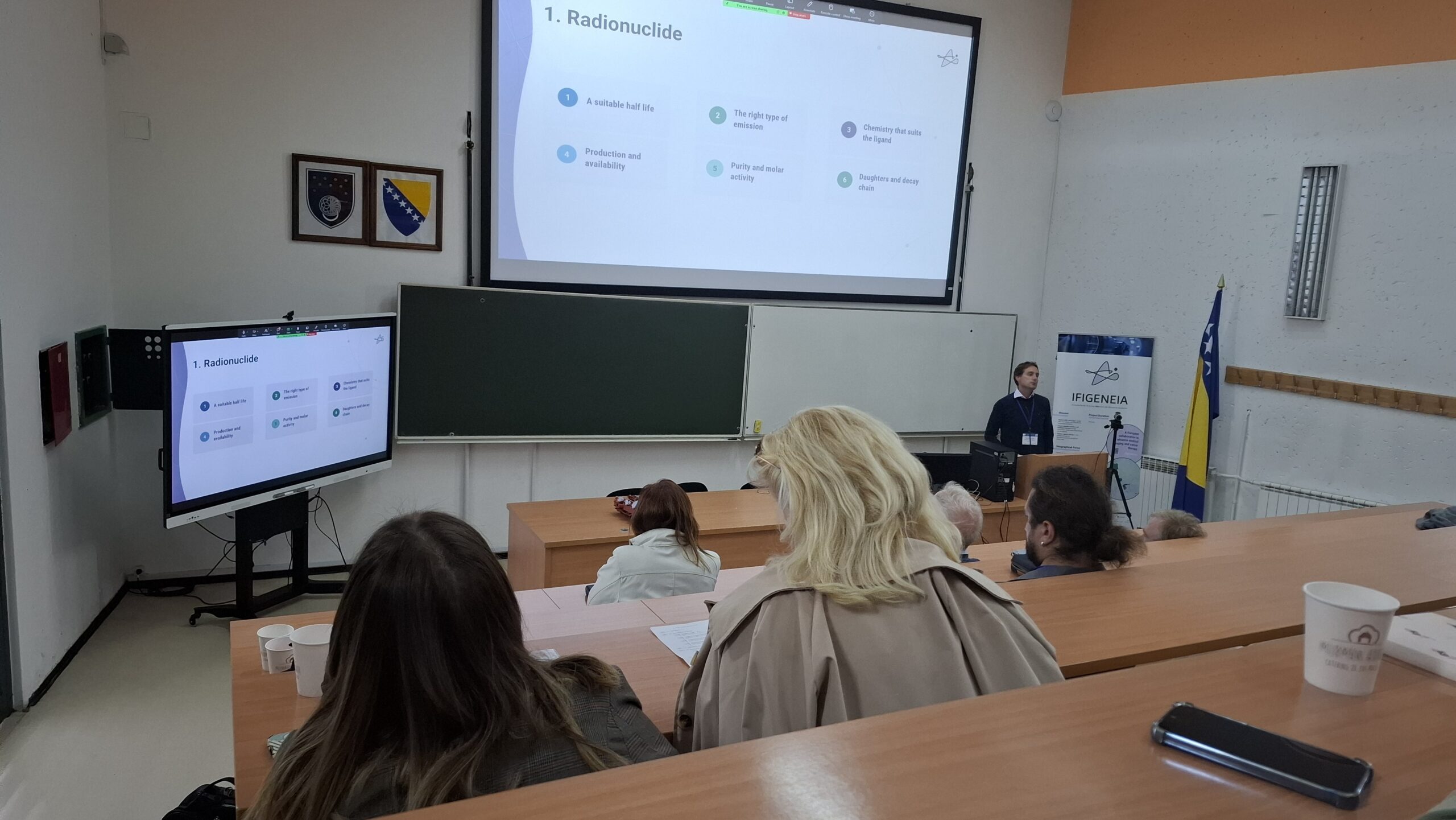
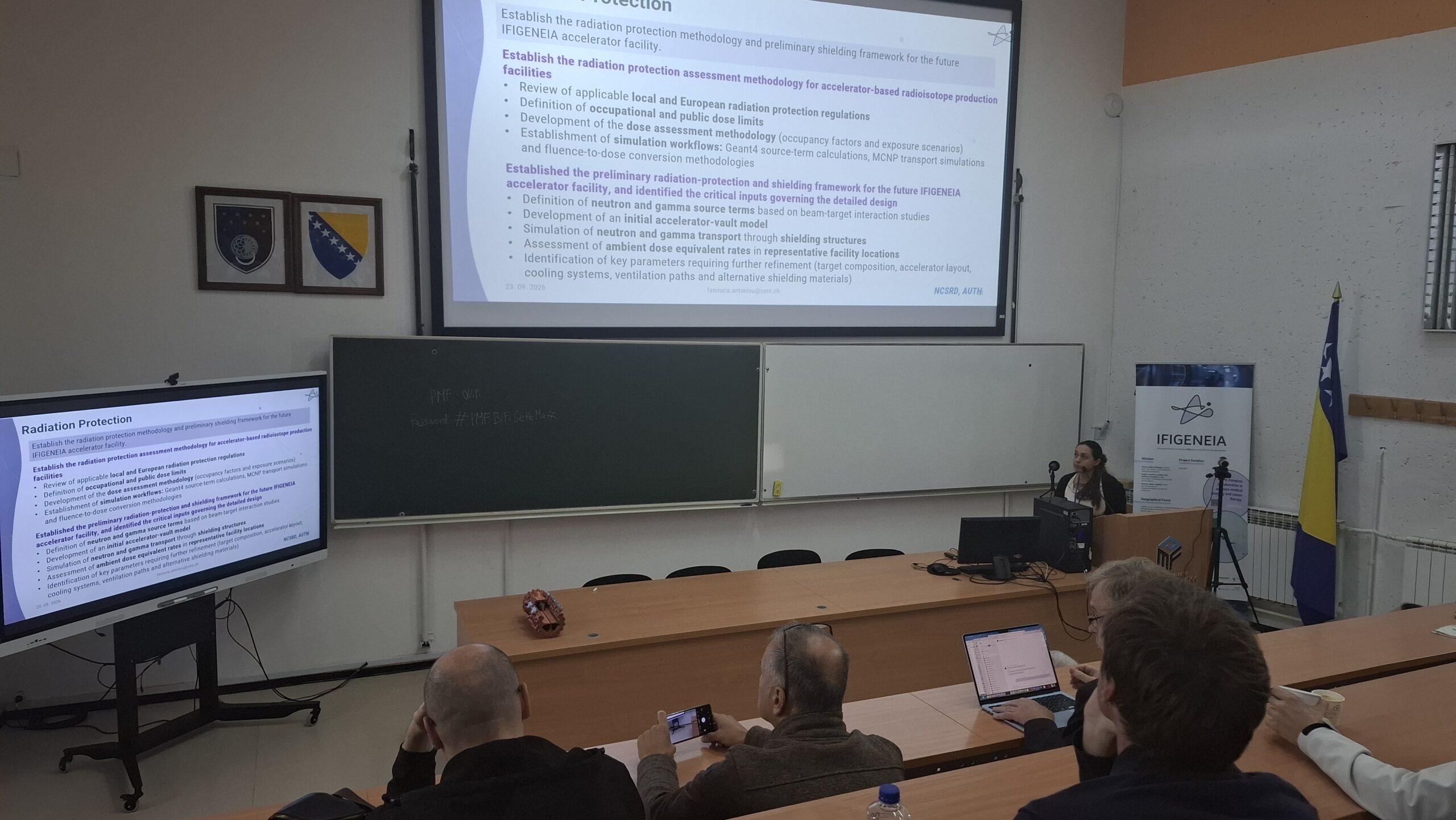
Over the two days, IFIGENEIA consortium members had the opportunity to discuss the project’s ideas with one another and with colleagues from leading international institutions. The talks explored radiopharmaceutical production, radiopharmacy, radiobiology and technology transfer. Participants also heard about IFIGENEIA’s accelerator plans and progress on the Sarajevo Ion Accelerator laboratory (SARAI).
We were delighted to welcome the ambassador of Greece, her excellence Ioanna Efthymiadou, and the ambassador of Slovenia, his excellence Damijan Sedar. Members of the IFIGENEIA coordination team had the opportunity to exchange views with the Greek ambassador, UNSA Rector Tarik Zaimović, faculty members and industry representatives. These conversations helped bring Bosnia and Herzegovina’s mentoring hub closer to becoming a full IFIGENEIA hub.
At the same time, as part of the CBI Challenge, 24 students from European universities were attending lectures by the same speakers in a different format; they were developing a small-scale project to present to a committee at the UNSA Rectorate on October 1st https://ifigeneia.eu/can-particle-accelerators-help-reduce-cadmium-in-raspberries/. The prize for the team with best proposal is a trip to CERN.
Our warmest thanks to the local organizers for bringing us together and making us feel so welcome! Their generous hospitality was a highlight of the visit, and we were grateful for the chance to discover a city whose history, energy and warmth left a lasting impression.